With the urban development towards internationalization and modernization, elevated helipads have emerged accordingly. In cities where land is scarce and traffic is congested, constructing elevated helipads not only enables emergency medical care for critically ill patients and rapid response to social emergencies but also serves multiple purposes such as firefighting operations.

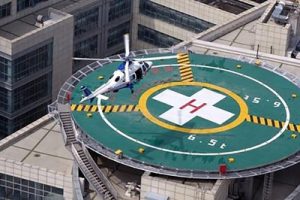

Among existing elevated helipads, rooftop helipads are designed in various configurations, but they generally incorporate the following essential components: apron, apron signage, navigation lighting, lock bolts, exits, protective fencing, and firefighting facilities. A brief discussion of these elements follows:
Designed in accordance with International Civil Aviation Organization (ICAO) Annex XIV and China Civil Aviation Standard MH5013-2008, this structure is intended for Class 1 performance helicopters. The standards are as follows:
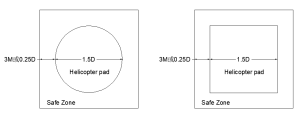
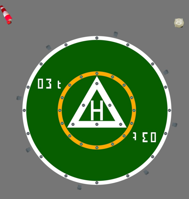
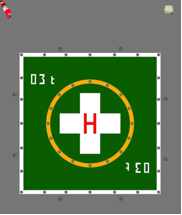
1. Design criteria for elevated helicopter landing pad areas. Elevated helicopter landing pads come in two shapes (square or circular).
- Design Standards for the Safety Zone The safety zone shall extend at least 3 meters or 0.25D from the final takeoff and landing area. Except for fragile components (with a height less than 25 cm), no other fixed or moving objects shall be present on the surface of the safety zone.
-